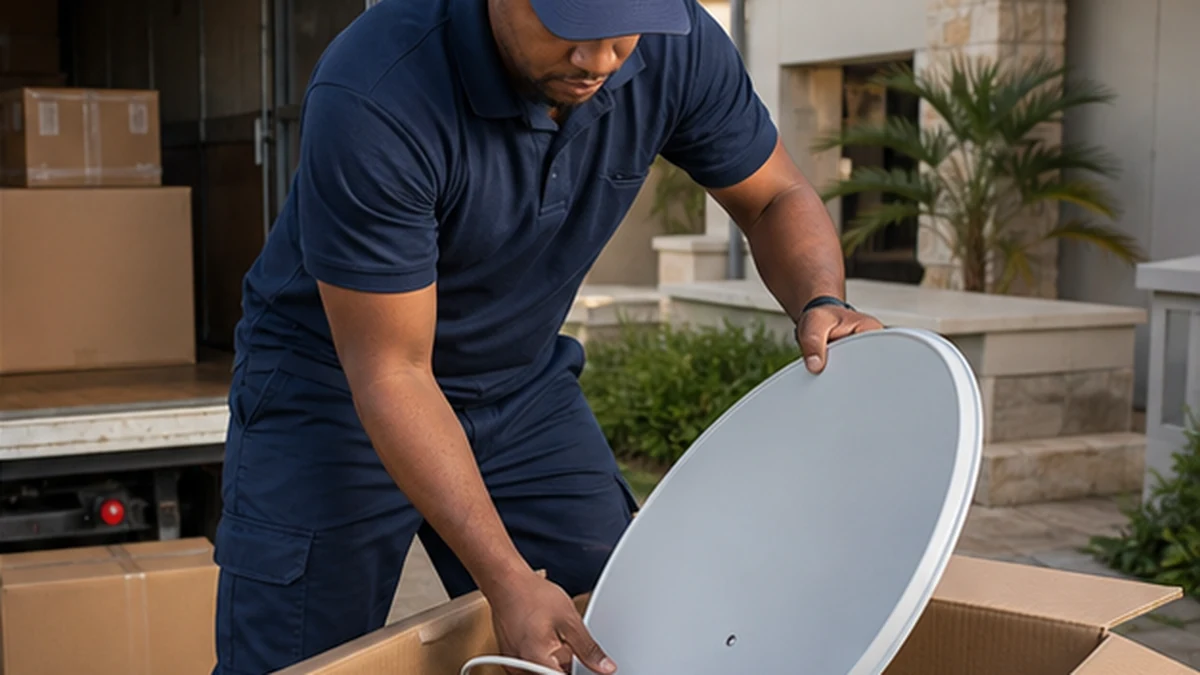
Move the system, not the old problems
Moving a decoder and dish is more than taking equipment from one wall and fixing it to another. The new property needs a suitable mounting point, a clear satellite path and a cable route that protects the signal. Our Kommetjie DStv relocation service assesses both the equipment being moved and the destination before installation begins.
If the dish or LNB has spent years in salt air, we check whether reuse is sensible. Serviceable parts can be retained. Corroded brackets, crushed cable and water-marked connectors should not be carried into a fresh setup.
Planning at the new address
At the destination, we look for a firm fixing surface and practical access. A dish should not be placed where a door, future building work or dense growth is likely to obstruct it. Wind exposure also matters around Slangkop and Klein Slangkop, where an unnecessarily high or exposed mount can make alignment harder to hold.
When a full new signal point is required, the work follows the same careful process as a DStv installation, including meter checks and a tested decoder connection.
Safe removal and equipment inspection
The old installation is disconnected methodically. We identify reusable parts, protect the decoder for transport and inspect the dish face, arm, LNB and bracket. Removal also reveals faults that were hidden while the system was mounted, such as rust at the base or cable damage behind clips.
Wall or roof repairs left by the old fixing are building-maintenance items, but we can explain what remains after removal so you can arrange the correct follow-up.
New cable routes that suit the building
Cable is routed for signal performance and a tidy finish. We avoid loose loops, sharp bends and unnecessary outdoor joins. Entry points are chosen with rain exposure in mind, and external connectors are sealed. Existing conduits can sometimes be reused after they are checked for access and cable condition.
For a move involving two linked decoders, our Extra View installation page explains why the complete multi-room layout should be planned together.
Alignment, connection and testing
Once mounted, the dish is aligned with a signal meter. We verify quality at the decoder point, not only at the dish, because every connector and metre of cable sits within the signal path. The decoder is then connected and tested on the new television setup.
If the picture later becomes unstable after severe weather, dish realignment and repairs provide a focused check rather than another full relocation.
A practical moving-day checklist
Keep the decoder, remote, power supply and any associated accessories together. Do not pack the decoder under heavy household items. Share the new address, decoder count and access details when booking, and mention whether the existing dish must be removed.
Where possible, schedule the satellite work after the television position is decided. That prevents a neat cable run from ending in the wrong part of the room and reduces avoidable changes.
DStv Relocation questions in Kommetjie
Yes. We can remove and assess the existing equipment, then install suitable reusable parts at the new address. Condition and compatibility are checked first.
No. Reuse depends on the dish, bracket, LNB and connectors being sound. Coastal corrosion or physical damage may make replacement the better technical option.
Keep the decoder, remote and power supply together in a dry, protected box. Avoid placing heavy items on top of the decoder during the move.
Yes, subject to a site and compatibility check. Both viewing points, decoder models, communication method and cable routes need to be planned as one system.