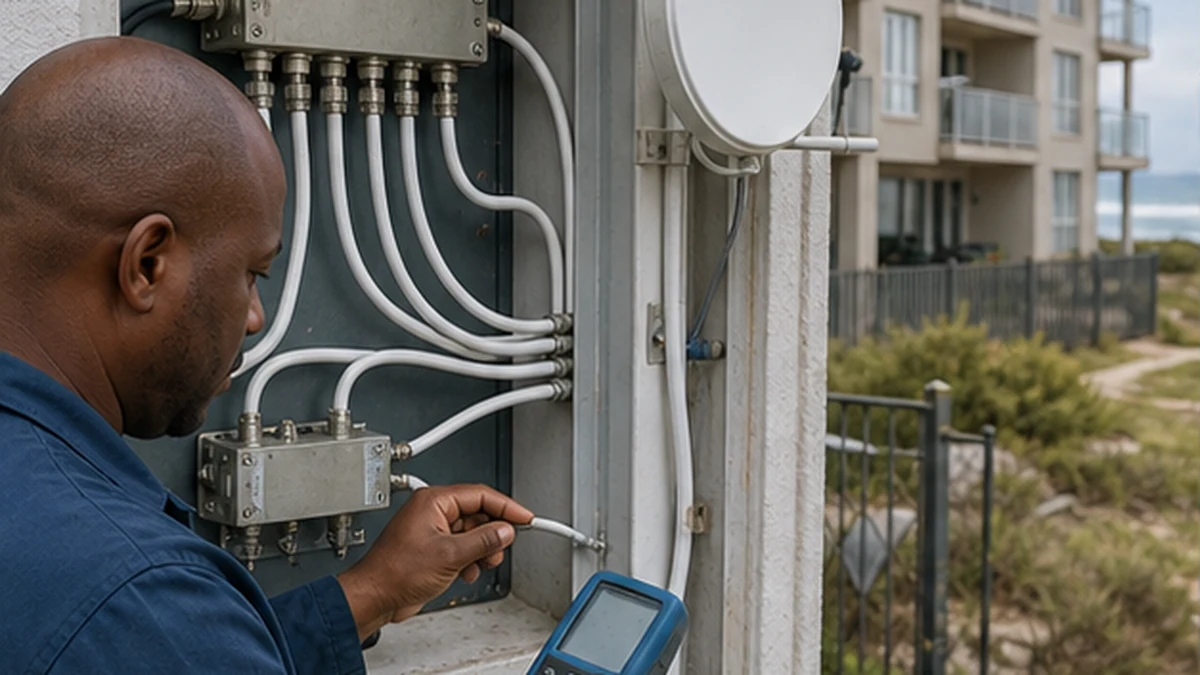
Understand how a small complex can share satellite infrastructure while keeping each unit practical to connect and maintain.
A communal satellite system lets several units use shared receiving infrastructure instead of adding a separate dish for every home. It can reduce roof clutter and simplify managed maintenance, but only when the distribution design, unit feeds and responsibilities are documented. A communal feed is not the same as one household's Extra View arrangement. This guide focuses on small complexes, sectional-title properties and grouped cottages in Kommetjie.
How a communal satellite system is organised
The shared dish receives the satellite signal and passes it to suitable distribution equipment. Dedicated cable paths then serve participating units. The exact design depends on unit count, decoder requirements, cable distances and future growth. Splitters intended for ordinary television aerials are not a substitute for correctly specified satellite distribution components.
Each resident can still require their own compatible decoder and account arrangement. The shared portion is the signal infrastructure, not necessarily the subscription. A site survey through the communal DStv systems service should map every unit and identify existing cables before equipment is selected.
Planning communal DStv in Kommetjie complexes
Start with permission and responsibility. The body corporate, owner group or property manager should approve the dish location, cable routes and equipment area. Record who can authorise access and who receives fault reports. Shared equipment should be reachable for maintenance without requiring entry through an unrelated private bedroom or locked holiday unit.
Properties in Imhoff's Gift, Kommetjie Village and Klein Slangkop may have different architectural or conduct rules. Obtain the relevant approval rather than assuming one complex follows another. Coastal exposure also makes a protected, ventilated equipment location valuable. Outdoor enclosures and connectors should be selected and sealed for their real environment.
Designing unit feeds and future capacity
List current and likely future viewing requirements. A unit using one decoder may have a different feed requirement from a unit planning compatible multi-room viewing. Cable distance and signal loss must be calculated rather than guessed. Spare capacity can be sensible where routes will become inaccessible after paving, ceilings or landscaping are completed.
Every cable should be labelled at both ends. Distribution ports, unit numbers and test results belong in a handover record. If a resident only wants a second decoder within one dwelling, compare that need with Extra View installation. It may use communal infrastructure, but it is not itself the communal backbone.
Fault finding on a shared system
The first question is whether one unit or several units are affected. A single failed feed can point to that unit's cable, connector or decoder. Several simultaneous faults can point to the shared dish, power supply or distribution equipment. Clear labelling prevents technicians from disconnecting healthy residents while tracing one line.
Residents should report the on-screen message, affected rooms and weather conditions. They should not open the shared cabinet or move dish settings. A maintenance provider can test levels at the head-end and unit outlet. Where the shared dish has shifted, dish realignment should include checks across representative feeds instead of one convenient decoder.
Kommetjie maintenance and handover records
Keep a simple diagram showing the dish, distribution equipment, power source, cable routes and unit labels. Store model details and previous test readings. When a unit renovates, require its contractor to protect shared cable and update the diagram if routes change. This prevents a private alteration from becoming a complex-wide mystery later.
Plan periodic visual inspections around exposed fittings, especially after severe wind or building work. Moisture damage can spread beyond a connector, as explained in the guide to water in satellite coax. If the property is run as guest accommodation, also review the guest-proof setup checklist for unit-level remotes and instructions.
Before approving work, ask for a scope that separates common-property infrastructure from work inside each unit. That distinction helps the manager allocate access and follow-up correctly. Notify residents about expected interruptions and keep the installer informed about units that cannot be entered. During handover, test a sensible sample of outlets and record any untested unit. The final diagram should be understandable to another competent technician, not dependent on one person's memory. Good records also help when ownership changes or a resident requests a decoder arrangement that the original system was not designed to support.
Shared power deserves explicit planning. Identify who may reset distribution equipment and what should remain powered during an outage or maintenance visit. Do not let residents connect unapproved power supplies to a common cabinet. Ventilation and surge arrangements should be assessed by the appropriate technicians. Post an equipment identifier and support route inside the managed area, but keep account credentials private. A controlled process reduces well-meant resets that interrupt every unit while one resident is troubleshooting. Confirm these responsibilities in writing at the annual management review.
Frequently asked questions in Kommetjie
Does communal DStv mean every unit shares one subscription?
No. Communal infrastructure distributes the satellite signal. Decoder ownership and subscription arrangements can remain separate for each unit.
Can a small Kommetjie complex use one ordinary splitter?
Satellite distribution needs compatible, purpose-designed equipment. An ordinary aerial splitter is not a safe assumption for decoder feeds.
Who should approve the shared dish location?
The body corporate, property owner or authorised management structure should approve common-property work under the rules that apply to that site.
Can one unit fault affect everyone?
Some head-end, dish or power faults can affect several units. A damaged cable within one unit may affect only that feed. Testing and labels help separate them.