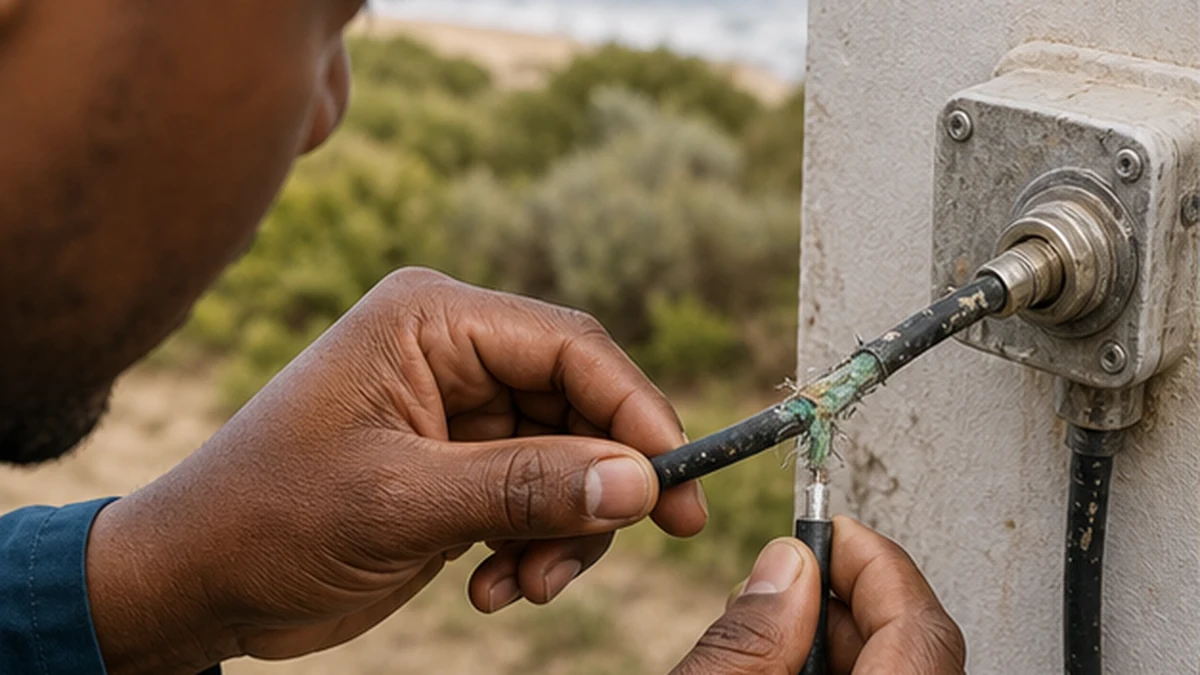
Learn how moisture enters DStv coaxial cable, what symptoms it causes and how a coastal signal path should be repaired.
Water inside a satellite cable affects more than the surface. Moisture can enter through an unsealed connector, damaged sheath or poorly formed drip loop, then travel along the braid. The result may be intermittent picture breakup, corrosion and unreliable power or signal between the decoder and LNB. Coastal air and driven rain make careful termination especially important in Kommetjie. This guide explains the fault without encouraging unsafe roof work.
How moisture enters satellite coaxial cable
The common entry point is an outdoor F-connector that is loose, badly fitted or no longer sealed. Water can also reach cable through a split outer jacket, a join resting in a gutter or an entry hole that lets rain track along the run. Cable should descend into a drip loop before entering the building so water falls away instead of following the sheath indoors.
Sun, wind and movement can age exposed runs. A cable tie pulled too tightly may deform the jacket. A metal edge can chafe it. Repeated flexing near a dish arm can open a small crack. These faults may be difficult to see from the ground, so avoid climbing and use a signal troubleshooting service when the route is inaccessible.
Signs of water in DStv coaxial cable
Symptoms can include picture breakup that worsens after rain, recurring signal errors, green or white corrosion at a connector, and damp staining near an indoor wall plate. These signs are not exclusive to water. Dish movement, a failing LNB and a loose connector can behave similarly. Diagnosis should therefore combine a physical inspection with signal measurements.
Check only areas that are safely accessible. Look for a cable entering from outside without a drip loop, visible cracks and connectors exposed directly to weather. Do not disconnect a wet satellite lead while equipment is powered. If signal loss follows a storm, compare the pattern with the Cape storm signal-loss guide before assuming the decoder itself has failed.
Why Kommetjie cable faults can be intermittent
Salt residue attracts moisture and accelerates corrosion on exposed metal. Wind-driven rain can reach fittings beneath eaves that normally appear sheltered. A connector may dry enough for viewing to return, then fail again during the next wet spell. That pattern tempts people to reset the decoder repeatedly, even though the physical signal path remains damaged.
Around Long Beach and Slangkop, exposure varies sharply with the building and mounting face. Old Kom homes can also contain cable routes added over many years. Location alone does not diagnose the fault. The useful clues are which connector faces the weather, when the problem appears, and whether measurements change along the run.
Repairing wet coax and corroded connectors
A wet connector should be removed and the cable checked beyond the visibly corroded end. Cutting back a few millimetres is not enough if moisture has travelled farther along the braid. The affected section may need replacement. New compression fittings should be terminated cleanly and external connections sealed with a suitable weatherproof method that still permits future service.
The LNB and wall entry should also be inspected. Replacing one connector while leaving a cracked run can create a short-lived fix. If dish alignment has shifted as well, combine cable repairs with professional dish realignment. Signal quality should be measured at the dish and decoder end after repairs.
Preventing water ingress in Kommetjie installations
Keep outdoor joins to a minimum. Use exterior-grade coax suitable for satellite work, support it without crushing, form drip loops and keep connectors away from standing water. A neat route is not merely cosmetic. It reduces movement, chafing and accidental damage. Do not paint over a connector or trap it permanently inside wet sealant, because future inspection remains necessary.
When planning a fresh system, ask how the external route will be protected. The Kommetjie installation cost guide explains why cable length, access and weatherproof parts belong in a clear quote. Periodic visual checks from the ground can catch loose clips or a hanging loop before the cable fails.
A proper handover should identify what was replaced and why. Ask to see the damaged connector or cable section where practical. Keep a note of the repaired route and the signal test result. Then watch whether the fault returns during similar weather. If it does, report the timing and affected viewing points rather than opening the termination yourself. Moisture can also damage nearby building finishes, so staining at an entry point may need separate building maintenance after the signal cable is made sound. Satellite work should correct the reception path, not conceal a leak in the wall or roof.
Do not ignore a fault because the picture returns on a dry day. Intermittent moisture can continue corroding the conductor and connector. It can also make measurements vary between visits. Write down the date, rain conditions and duration of each outage. Note whether all viewing points fail together. This history helps a technician choose the right test points and avoids treating each recurrence as an unrelated decoder reset.
Frequently asked questions in Kommetjie
Can water travel inside DStv coaxial cable?
Yes. Moisture can move along the braid beneath the outer jacket, so damage may extend farther than the wet connector that is visible.
Will drying the connector fix the signal?
Not reliably. Corrosion and moisture may remain inside the cable. The affected run and equipment need inspection and signal testing.
Is every rain-related Kommetjie signal fault caused by wet cable?
No. Heavy weather can coincide with dish movement, temporary rain fade, a failing LNB or loose fittings. Testing separates these causes.
Can I seal an outdoor connector with household tape?
Household tape is not a dependable long-term repair. The termination should be sound first, then protected with a suitable exterior weatherproofing method.