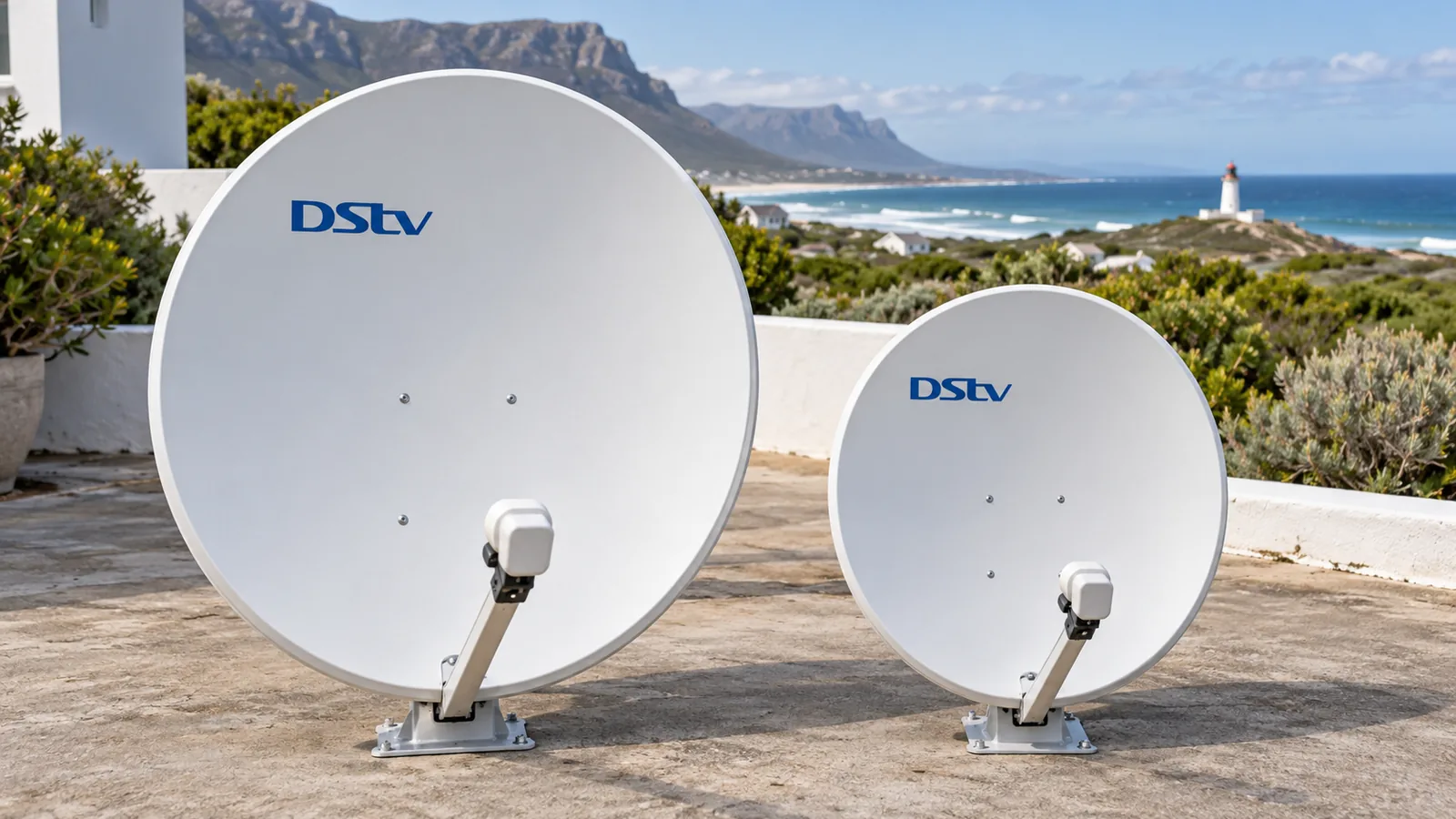
Bigger is better, right? Not always. On a low coastal roof in Kommetjie, the right DStv dish size is a balance between pulling in a strong signal through Atlantic rain and not turning your wall into a sail every time the north-wester hits. This plain-talking guide compares the two common sizes, what they cost and how we decide which one goes up on your house.
Quick answer
For most Kommetjie homes, an 80cm dish is the DStv dish size we recommend. It keeps more signal in reserve during heavy coastal rain than a 60cm dish, but catches more wind, so it needs a strong bracket and solid wall fixings. The number of decoders does not change the dish size. The LNB does that job.
DStv Dish Size Basics: What 60cm and 80cm Really Mean
The number is simply the width of the dish face. A bigger face catches more of the signal coming from the satellite and focuses it onto the LNB, the small unit on the arm. More signal collected means more headroom when cloud and rain weaken it on the way down.
DStv in South Africa comes from the Intelsat 20 satellite at 68.5 degrees East. In the Western Cape that means dishes point roughly north-east and fairly high. Whatever the DStv dish size, it needs a clear view in that direction, with no milkwood, roofline or neighbour's second storey in the way.
Size and aim work together. A large dish that is a few millimetres off target can perform worse than a small one that is spot on. Our guide on reading and setting the DStv signal in Kommetjie explains the strength and quality bars you will see on the decoder.
- 60cm dish: the smaller, lighter option. It is often enough inland in good conditions.
- 80cm dish: the larger option, with more signal margin in rain and cloud. It is the usual choice on the coast.
- 90cm and up: used for special cases, such as weak spots or bigger shared systems. It is rarely needed on a single home.
DStv Dish Size Compared: 60cm Dish vs 80cm Dish in Kommetjie
Here is how each DStv dish size stacks up for houses on this stretch of the Atlantic coast:
| Factor | 60cm dish | 80cm dish |
|---|---|---|
| Signal margin in heavy rain | Less headroom, drops out sooner | More headroom, rides out more storms |
| Wind load on the bracket | Lower | Higher, needs stronger fixings |
| Looks on the house | Smaller and less noticeable | More visible on a low coastal wall |
| Typical use in Kommetjie | Sheltered spots, smaller flats | Most freestanding homes |
| Works with Explora and XtraView | Yes, with the right LNB | Yes, with the right LNB |
Industry guides we checked agree that the 60cm dish is the standard size for much of South Africa, while an 80cm dish is the safer pick in coastal areas like Cape Town. That matches what we see on the peninsula. A 60cm dish can work in a sheltered courtyard in Kommetjie village, but on an exposed wall near Long Beach we nearly always go bigger.
Holiday homes add another reason. If the house sits empty for weeks, nobody is there to notice a dish that has crept off target. Picking the larger DStv dish size gives you more margin before guests see a frozen picture, and our dish realignment in Kommetjie can reset it before the season starts.
Rain Fade and Wind: The Atlantic Side Test for DStv Dish Size in Kommetjie
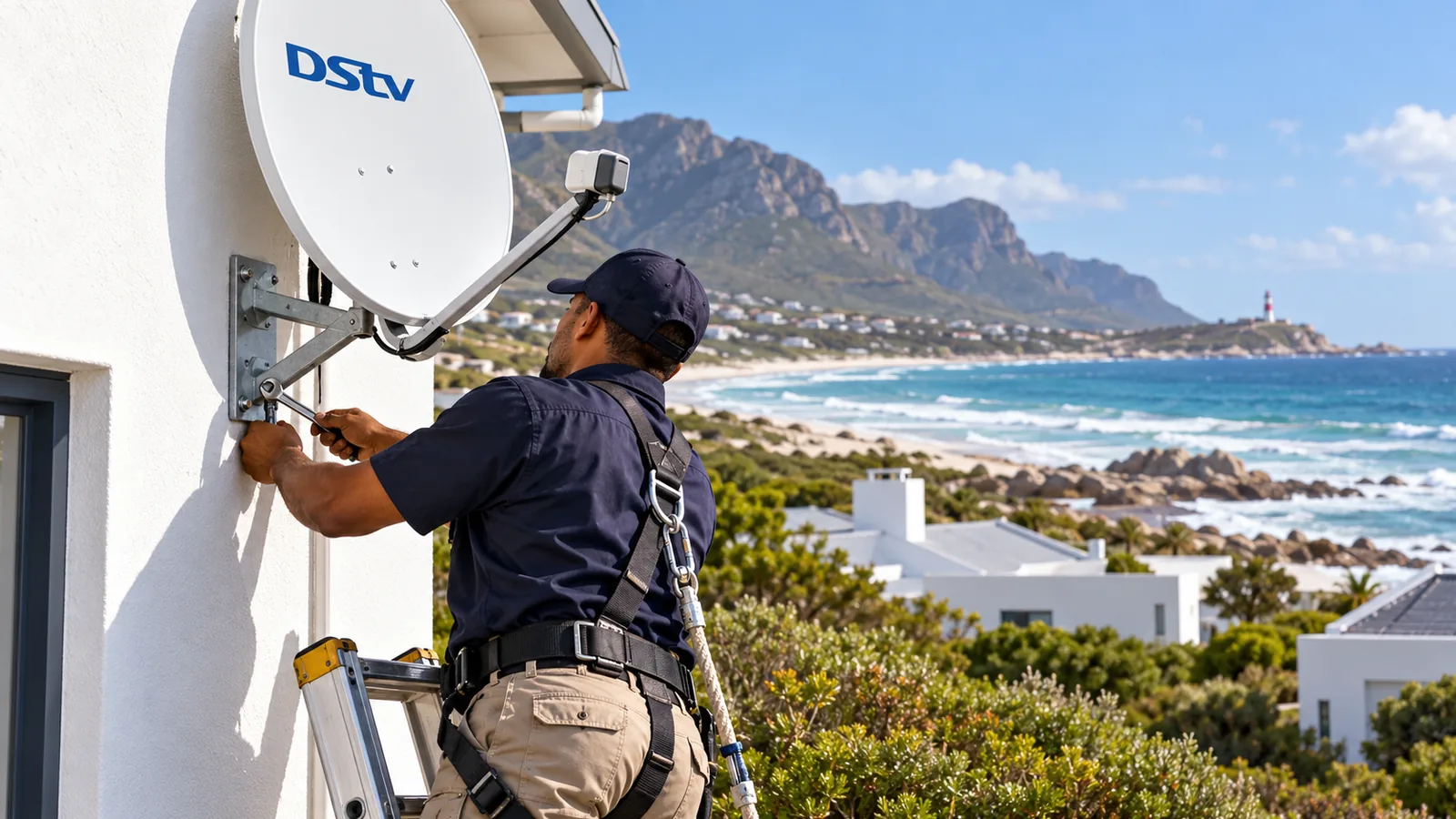
Two weather problems shape the choice here, and the first is rain fade. When a thick band of rain passes between the dish and the satellite, the picture can freeze or drop. A larger, well-aligned dish keeps more signal in reserve. Our older post on DStv signal loss in Cape storms goes deeper into what the weather does.
The second is wind. Kommetjie gets strong north-westers in winter and a stiff south-easter in summer. A dish face acts like a sail, and the bigger the face, the harder the wind pushes. That push is called dish wind loading, and it is what slowly knocks a dish off target or loosens a weak bracket.
Good to know
No dish size stops rain fade completely during a really heavy downpour. If the picture drops for a few minutes in a storm and comes back on its own, that is normal. If it drops in light drizzle, the dish is probably misaligned or the LNB is worn.
Why a bigger dish still wins here
You might think the wind argues for a smaller dish. In practice, wind is a mounting problem, and mounting problems have a fix. Rain fade is a signal problem, and only more dish area or better alignment helps. So we pick the size for signal, then build the mounting to handle the wind.
Need DStv help in Kommetjie?
Tell us what you need or what your screen shows. We price the job before we drive out.
Brackets, Fixings and Dish Wind Loading on Coastal Walls
Any DStv dish size is only as good as the bracket holding it. On the coast, we look at three things before drilling a single hole:
- The wall itself. Solid brick or block takes heavy anchors well. Old plaster over soft brick may need longer fixings or a different spot.
- The bracket. A heavy-duty galvanised wall bracket resists both bending and rust far better than a thin one.
- The fixings. Stainless or well-coated bolts, sealed at the wall, so salt water does not creep in and rust them from inside.
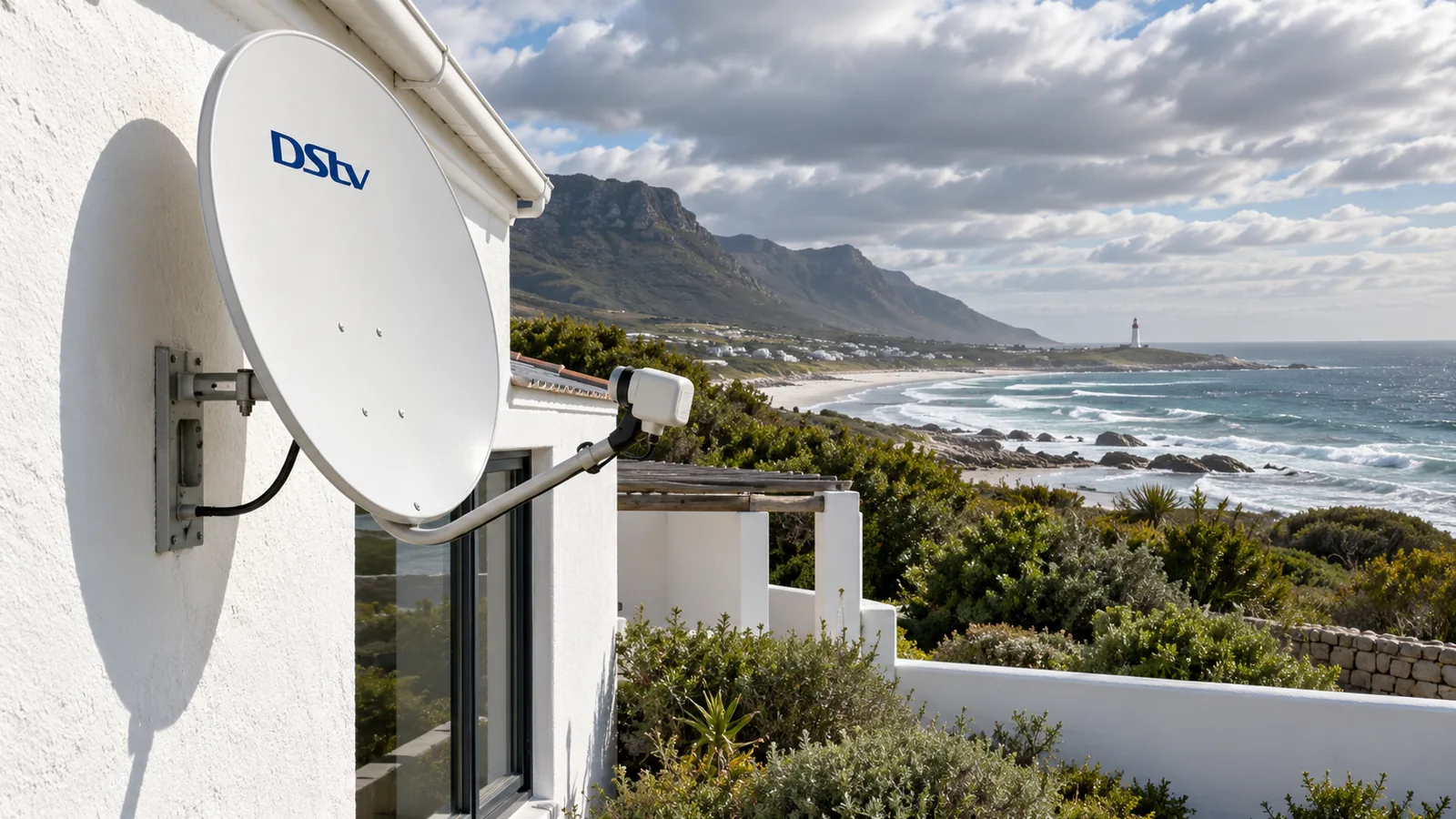
Rusted brackets are the most common reason we are called out to realign dishes in Kommetjie, Capri and Sunnydale. If yours has slipped after a front, we reset it on a signal meter and replace tired fixings. Our older post on dish placement for salt air and coastal homes also covers where to mount it.
Safety first
An 80cm dish is heavy and awkward on a ladder, and a gust can twist it out of your hands. Please do not fit or adjust a dish on a roof or high wall yourself, especially in wind. Keep well clear of overhead power lines.
More Decoders Does Not Mean a Bigger DStv Dish Size
This catches a lot of people out. The DStv dish size has nothing to do with how many TVs you run. Adding an Explora or a second TV through XtraView does not call for a bigger dish. The dish collects the signal, but the LNB decides how many decoders or tuners can use it.
- A single HD decoder works with a standard LNB.
- An Explora or Explora Ultra needs a Smart LNB, which feeds several tuners.
- XtraView with two or three decoders also runs off the right LNB, not a larger dish.
- Complexes with many units need a communal system, which is a different setup altogether.
Our explainer on the DStv LNB for Kommetjie homes covers which LNB suits which decoder. A Smart LNB sells for roughly R399 to R499 at the time of writing.
DStv Dish Price and Installation Costs in Kommetjie
Whichever DStv dish size you choose, the dish on its own is not the expensive part. At the time of writing, the retail and installer sources we checked put a dish on its own at roughly R300 to R750, depending on size, brand and where you buy. Compare on the day, and note that the box price usually excludes the bracket, LNB, cable and fitting.
| Job | Typical budget (at the time of writing) |
|---|---|
| Standard single view DStv installation | About R850 to R1,400 |
| Explora with Smart LNB, long cable runs or tricky roofs | About R1,500 to R2,400 |
| Smart LNB on its own | Roughly R399 to R499 |
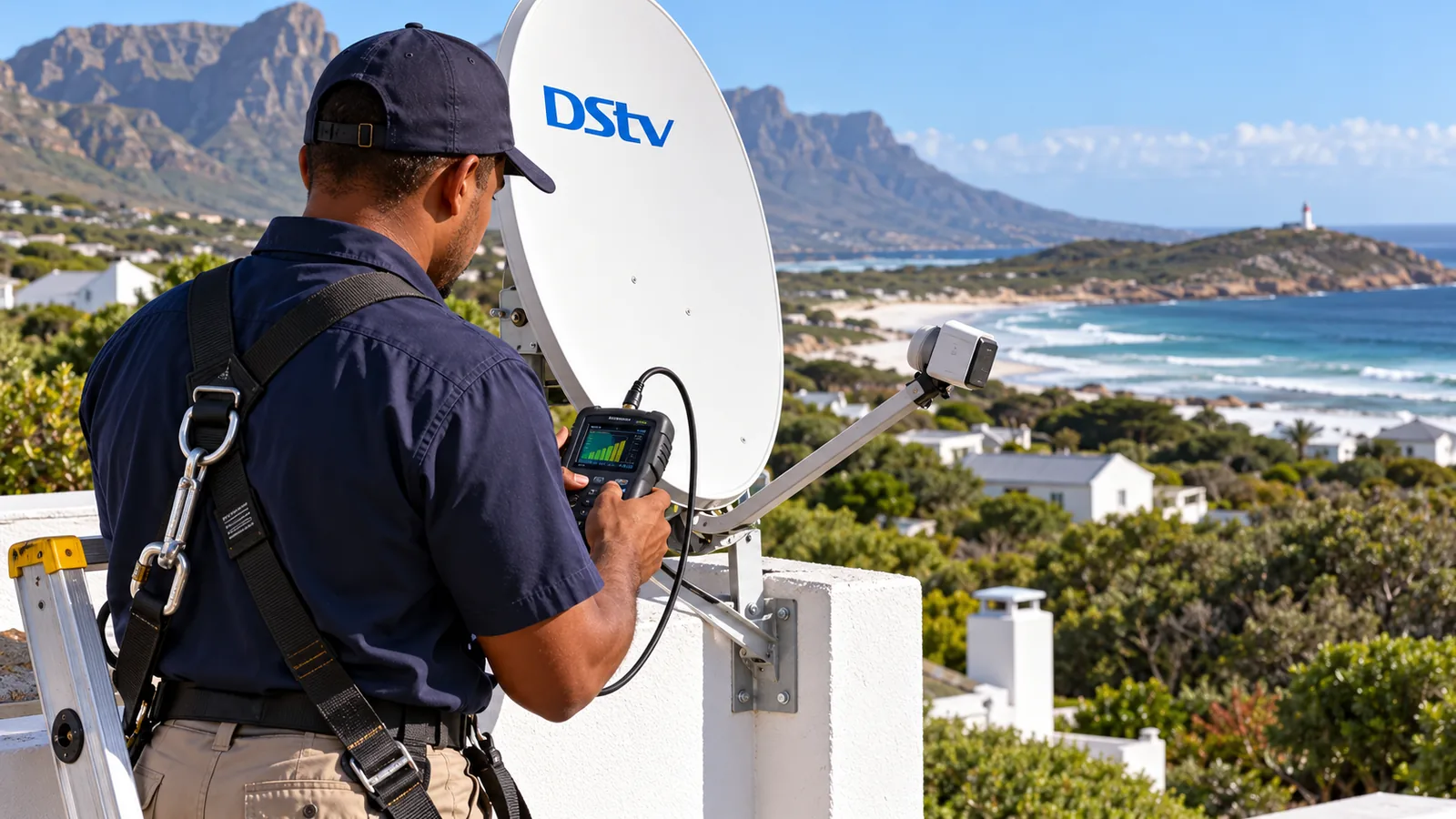
A standard install usually includes the dish, LNB, bracket, cable run, connectors, weatherproofing, alignment on a signal meter, decoder setup and testing. The decoder is normally bought separately. The DStv dish price is only one line on that list, and we always quote first so you know the full figure before we drive out. See our DStv installation service in Kommetjie for what a visit covers.
Do You Need a Dish at All?
Not every home in Kommetjie needs to worry about DStv dish size at all. If you have reliable fibre, streaming DStv over the internet skips the dish, the bracket and the wind question entirely. Our guide to DStv Stream packages in Kommetjie compares the options with satellite.
If you keep the dish, getting the Explora online opens up extra shows. Our guide to the DStv WiFi connector in Kommetjie shows how. You can also check what each satellite package includes on the official DStv website.
Technician tip
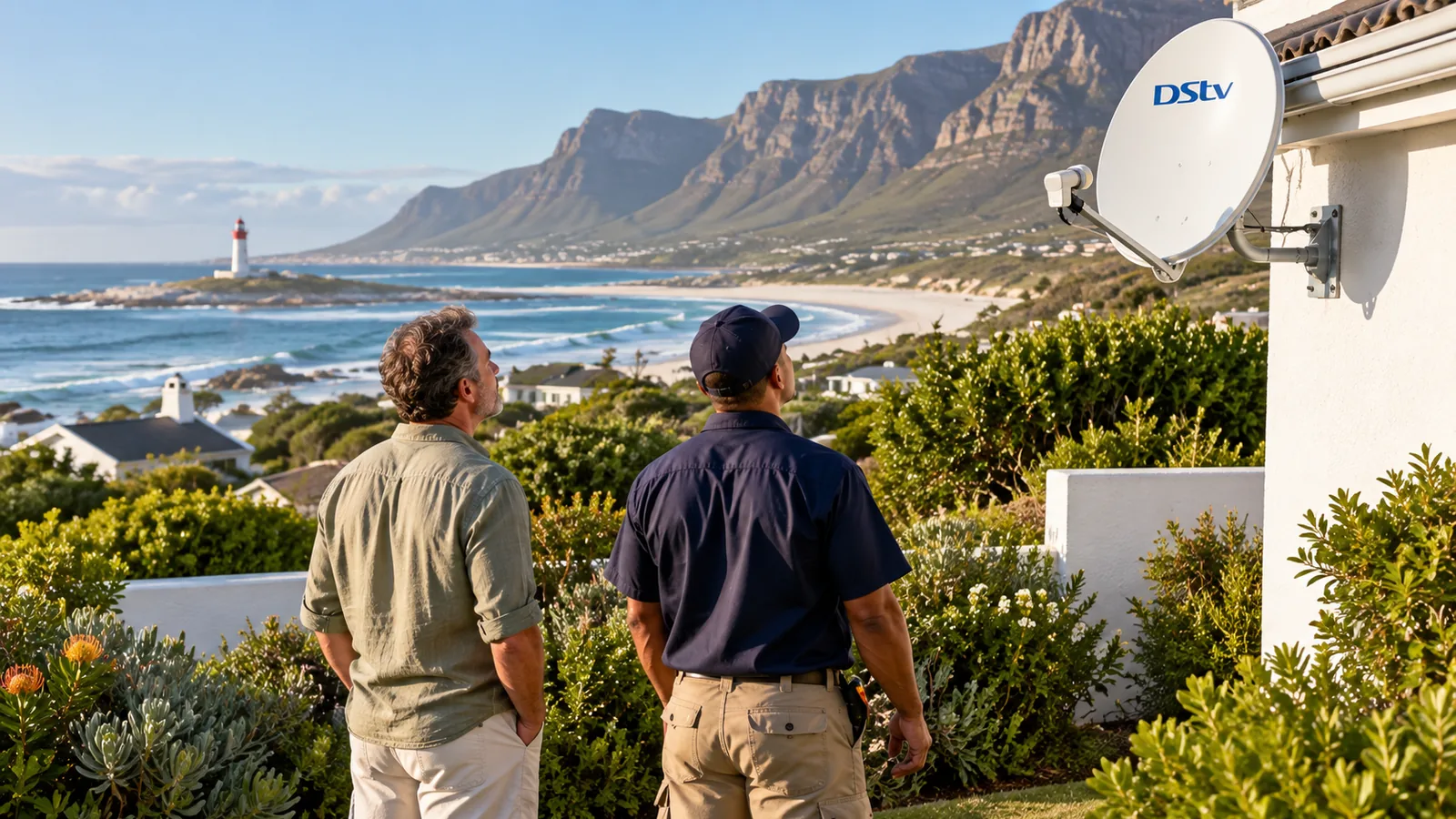
Before choosing a spot, stand where the dish will go and look north-east, fairly high up. If a milkwood or the neighbour's roof fills that view, move the spot, not the dish size. A bigger dish cannot see through a tree.
Get the Right Dish Size for Your Kommetjie Home
Not sure which DStv dish size suits your roof? We fit dishes across Kommetjie, Klein Slangkop, Imhoff's Gift, Ocean View, Misty Cliffs and Scarborough, mount them to handle the wind and test the signal with you. Talk to our DStv installers in Kommetjie or request a quote for your dish, and we are usually out the same or next day, depending on the schedule.
DStv dish size in Kommetjie: FAQs
What is the standard DStv dish size?
The common DStv dish size options for homes are 60cm and 80cm. Industry guides treat 60cm as the standard size for much of South Africa, while 80cm is the usual pick in coastal areas like Cape Town because it gives more signal margin during heavy rain. Larger dishes are used for special cases and shared systems.
Is an 80cm dish better than a 60cm dish in Kommetjie?
For most homes in Kommetjie, yes. An 80cm dish collects more signal, so it copes better with rain fade during Atlantic storms. It does catch more wind, so it needs a heavy-duty bracket and solid fixings. A 60cm dish can still work in a sheltered spot with a clear view of the sky.
How much is a DStv dish only?
At the time of writing, sources we checked put a dish on its own at roughly R300 to R750, depending on size, brand and store. Compare prices on the day. The dish price usually excludes the bracket, LNB, cable and installation, which together make up most of the cost of a working setup.
Does the DStv dish size change if I add more decoders?
No. The DStv dish size stays the same when you add an Explora or more TVs through XtraView. What changes is the LNB. An Explora needs a Smart LNB that feeds several tuners. Blocks of flats with many units need a communal system, which is designed differently.
What DStv dish size works for OpenView in Kommetjie?
OpenView recommends a dish of around 80 to 85cm. In Kommetjie that suits the coastal weather well. Because OpenView broadcasts from the same satellite position as DStv, an existing DStv dish can often be reused for OpenView after a technician checks the LNB and cabling.
Why does my DStv dish keep moving in the wind?
Usually the bracket is too light, the fixings have rusted, or the wall plugs have loosened. Dish wind loading is strong on the coast, especially on bigger dishes. A heavy-duty galvanised bracket with sealed stainless or well-coated bolts, plus realignment on a signal meter, normally fixes it for good.